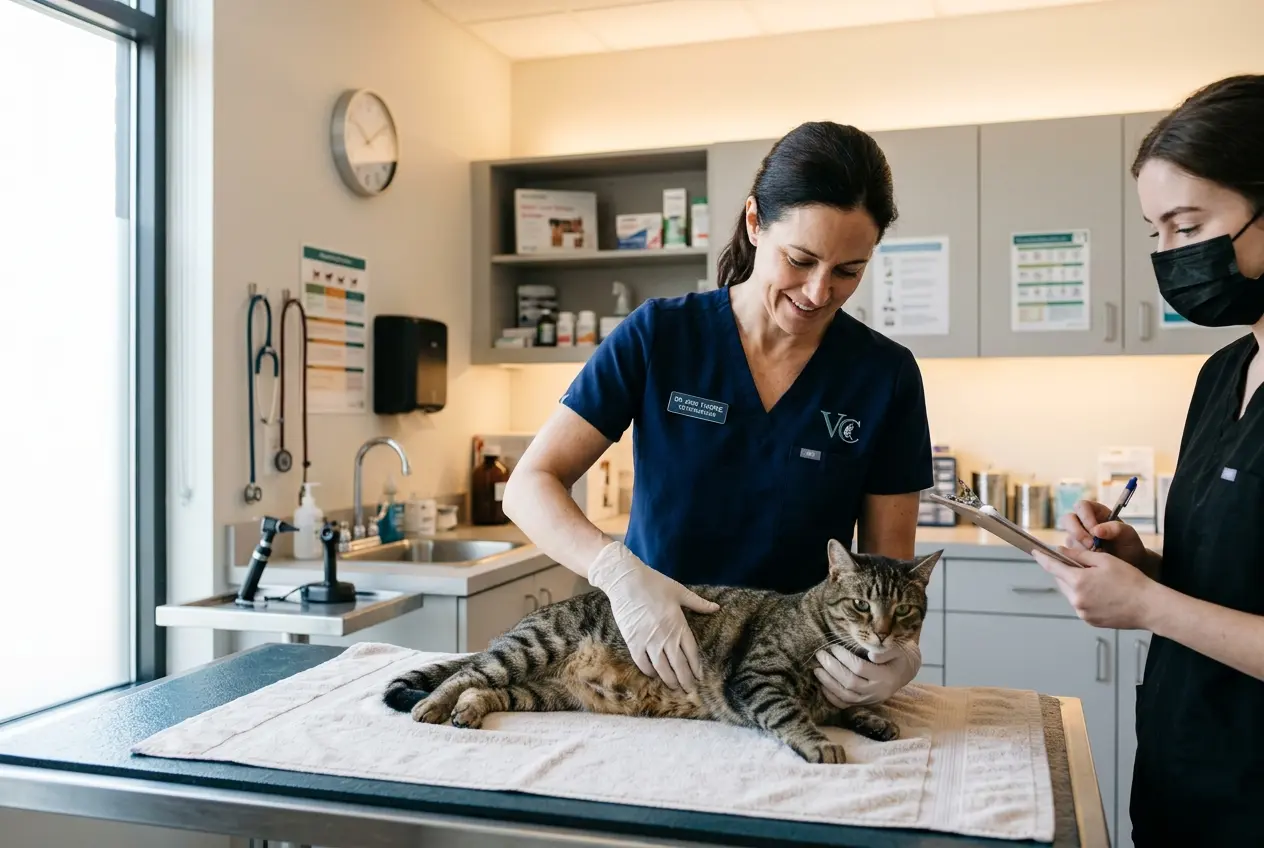
Our preventive care program addresses the specific health risks pets face in Western North Carolina. During twice-yearly exams, we check for common regional issues like Lyme disease from local ticks, seasonal allergies from mountain flora, and weight management for less active winter months.
We customize vaccines based on your pet's exposure risk - whether they're downtown apartment cats or trail-hiking dogs. Our nutritional counseling considers Asheville's altitude and climate, while dental evaluations prevent costly problems later. For senior pets, we monitor arthritis that can worsen in our colder months.
We customize vaccines based on your pet's exposure risk - whether they're downtown apartment cats or trail-hiking dogs. Our nutritional counseling considers Asheville's altitude and climate, while dental evaluations prevent costly problems later. For senior pets, we monitor arthritis that can worsen in our colder months.
Our Process
- 01 Step 1: Complete health history review including lifestyle and local exposure risks
- 02 Step 2: Nose-to-tail physical examination with weight and body condition scoring
- 03 Step 3: Diagnostic testing as needed (parasite screening, blood work)
- 04 Step 4: Personalized care plan with vaccine schedule and follow-up timeline
Benefits
- Early detection of common regional health issues
- Customized vaccine protocols
- Nutritional advice for mountain living
- Dental health monitoring
Frequently Asked Questions
Why do indoor cats need preventive care in Asheville?
Even indoor pets face risks like seasonal allergens that enter homes and potential exposure from Asheville's abundant wildlife. Our altitude can also affect hydration needs.
How often should my dog have preventive exams?
We recommend every 6 months for dogs - this allows us to catch issues between vaccine cycles and adjust for seasonal changes in activity levels.